
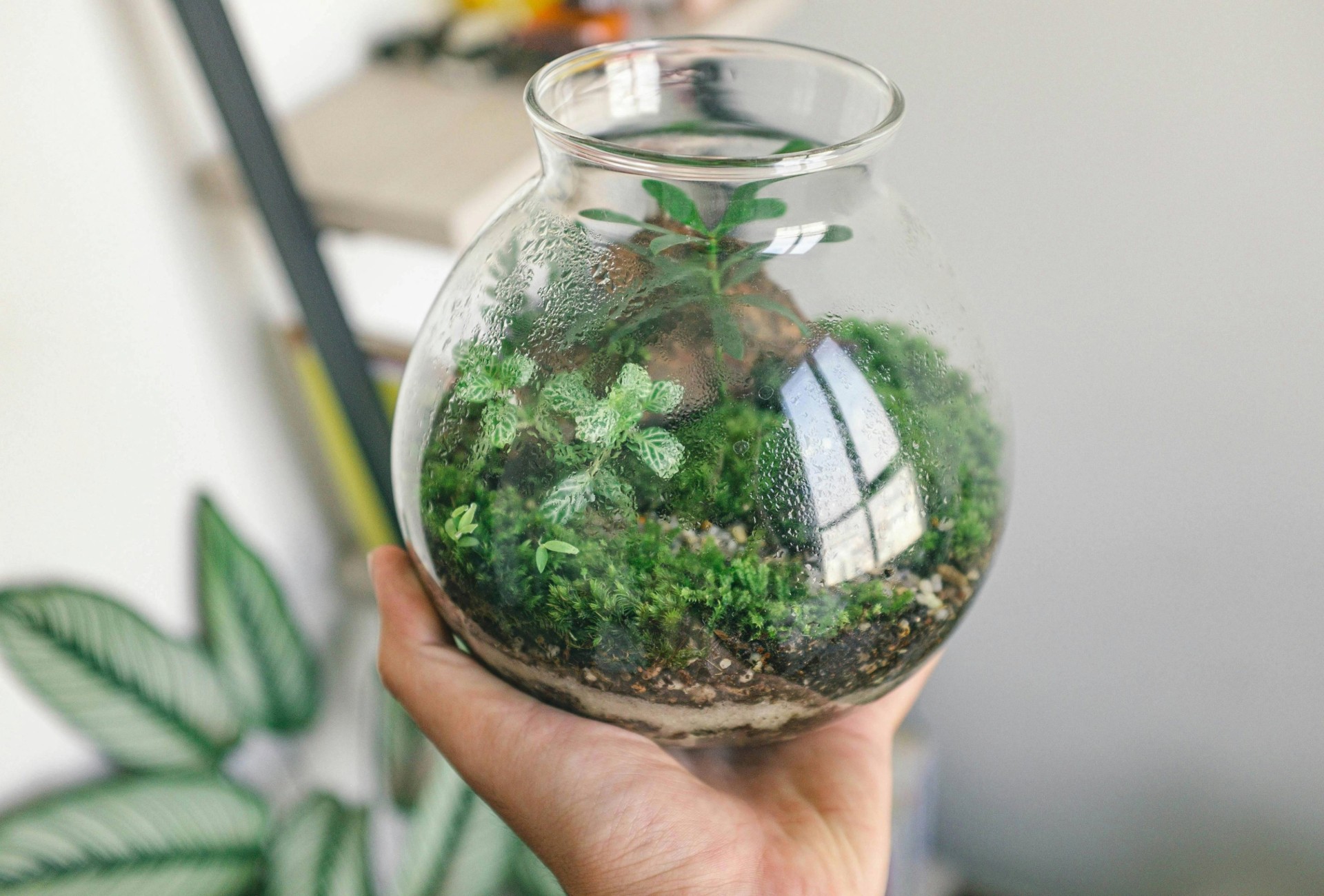
Imagine a tiny, thriving world sealed inside a glass jar… No daily watering, no stress, just a calm, green ecosystem quietly living on your shelf. That’s the magic of a terrarium and yes, you can absolutely create one, even in a small apartment.
What is a terrarium?
A terrarium is a small, self-contained ecosystem for plants, usually created inside a glass container called a terrarium enclosure. Depending on the type, it can survive with minimal care for months, sometimes even years.
There are two main types: closed and open.
🌧️Closed terrarium
A closed terrarium is sealed, humid, and almost self-sustaining. Inside the jar, moisture continuously recycles itself, creating the perfect environment for tropical plants that love humidity.
Perfect if you:
- Want a low-maintenance plant project
- Live in a small apartment
- Forget to water plants
- Love mossy, rainforest aesthetics
Best plants for closed terrariums:
- Moss
- Ferns
- Fittonia (nerve plant)
- Baby tears
- Peperomia
Closed terrariums are often considered the best terrarium kits for beginners because they require very little intervention once balanced.


🌵Open terrarium
An open terrarium is unsealed and allows airflow. These are better suited for dry-loving plants and require occasional watering.
Perfect if you:
- Prefer succulents or cactus
- Want more control over watering
- Have a bright sunny spot at home
Best plants for open terrariums:
- Succulents
- Cactus
- Haworthia
- Echeveria
If you love desert aesthetics, open terrariums are an amazing option. Discover more about cactus in my previous article: My Grandpa teaches me how to care for cacti.


How does a terrarium work
Think of a terrarium as nature in slow motion: simple, quiet, and beautifully self-sufficient. A closed terrarium contains a complete ecosystem in which matter is continuously recycled while energy enters primarily through light. The interaction between plants, microorganisms, water, and light enables the system to remain stable and self-sustaining over time (Goyal et al., 2023, pp. 1-2).
Briefly, inside a closed terrarium, several natural processes happen continuously:
💧 Water cycle: Water evaporates from the soil and plants, condenses on the glass walls, and falls back down into the substrate. It’s essentially a miniature rain cycle happening inside your jar.
🌿 Photosynthesis: Plants absorb light, grow slowly, and release oxygen into the enclosed environment.
⚖️ Natural balance: Microorganisms in the soil break down organic matter, nutrients recycle naturally, and the ecosystem stabilizes over time.

This is why many terrariums can survive months, or even years, with minimal care.
Why terrariums are perfect for small appartments
Terrariums have become incredibly popular because they make indoor gardening feel easy and accessible, even for beginners living in small apartments. You don’t need a balcony, expensive tools, or gardening experience, just a small glass container and a little curiosity.
Beyond being beautiful decorative pieces, terrariums bring nature indoors, create a calming atmosphere, and encourage slower, more mindful routines. Watching a tiny ecosystem grow and balance itself over time can be surprisingly relaxing.
Essentials: what you need to build a terrarium
A terrarium may look complex at first, but it’s actually built from just a few simple layers working together to create a healthy miniature ecosystem. Once you understand the basics, creating one becomes a relaxing and creative process, even for complete beginners.
- Glass container
- Gravel or pebbles for drainage
- Activated charcoal
- Suitable soil/substrate
- Beginner-friendly plants
- Optional decorations like stones or driftwood
The glass container acts as the home for your tiny ecosystem, allowing light to reach the plants while showcasing the landscape inside. At the bottom, a drainage layer made of gravel or pebbles helps prevent excess water from collecting around the roots, which is especially important in closed terrariums.
A thin layer of activated charcoal keeps the environment fresh by reducing odors and limiting mold growth. Above that, the right soil helps plants thrive: tropical plants prefer moisture-retaining mixes, while succulents and cacti need sandy, fast-draining soil.
Choosing slow-growing plants like moss, fittonia, small ferns, or mini succulents makes maintenance much easier for beginners. Finally, decorative details such as stones, driftwood, or preserved moss can transform a simple jar into a beautiful miniature landscape full of personality.
How to make a terrarium (step-by-step)
Building a terrarium is simpler than it looks and becomes surprisingly relaxing once you start layering the materials. The goal isn’t perfection, but creating a small balanced ecosystem that feels natural and personal.
- Add drainage layer (gravel)
- Insert activated charcoal
- Add soil
- Plant carefully
- Decorate
- Close (if it’s a closed terrarium) and place it correctly
Start by adding a thin layer of gravel or pebbles at the bottom of the container to prevent excess water from collecting around the roots. Then add a small layer of activated charcoal to keep the environment fresh and reduce mold or odors over time. Once the base is ready, pour in enough soil to support the plants’ roots and gently position the plants using your fingers or small tweezers, leaving a little space for growth.
After planting, you can personalize your terrarium with decorative elements like moss, stones, or small pieces of wood to create your own miniature landscape. If you’re making a closed terrarium, place the lid on and keep it in bright indirect light, avoiding direct sun that could overheat the plants. Over the next few days, you may notice tiny droplets forming on the glass, a natural sign that the internal water cycle is working properly.
My first terrarium experience
The first time I built a terrarium, I thought I would fail: too much water, wrong plants, maybe even mold. Instead, after a few weeks, the ecosystem slowly balanced itself naturally. Tiny droplets formed on the glass, the moss expanded, and the plants adapted with very little care. That’s when I realized terrariums don’t require perfection, just patience.
Watch this DIY terrarium for beginners video to see how I created my first closed terrarium at home:
Best terrarium kits for beginners
If choosing materials separately feels overwhelming, a terrarium kit is one of the easiest ways to start. Most beginner-friendly kits include everything you need to create your first miniature ecosystem, helping you focus on the fun and creative part instead of worrying about supplies.
A typical terrarium kit includes:
- a glass container
- drainage materials and charcoal
- soil or substrate
- beginner-friendly plants
- step-by-step instructions
When searching online, terms like “terrarium kit for beginners” or “DIY terrarium kit for adults” can help you find beginner-friendly options that make indoor gardening feel simple and approachable.
In Switzerland, you can find terrarium kits in garden centers, plant shops, and online stores such as Studio Plant, Jumbo, Do it + Garden Migros, or specialized indoor gardening boutiques.
👉 Which shop would you recommend for buying a beginner-friendly terrarium kit?
Common beginner mistakes and how to avoid them
The most common terrarium mistake is overwatering. Because the environment is enclosed, terrariums need far less water than regular houseplants. If the glass stays constantly foggy or water collects at the bottom, simply open the lid for a few hours to release excess humidity.
Another common issue is direct sunlight. Glass traps heat quickly, and too much sun can overheat the plants. Bright indirect light is usually the safest option.
Finally, avoid mixing plants with completely different needs. Moss and tropical plants love humidity, while succulents and cacti prefer dry conditions. Keeping similar plants together makes the terrarium much easier to maintain.
Final Thought
You don’t need a garden. You don’t need experience. You don’t need a perfect “green thumb.” You just need one small jar to begin.
Terrariums remind us that nature doesn’t have to be big or complicated to be meaningful. Even a tiny ecosystem on a shelf can bring calm, beauty, and a sense of connection into your daily life.
Start small. Observe slowly. Enjoy the process.
👉 Create your first terrarium this weekend and bring a tiny living world into your space.

Bibliography:
- Goyal A., Flamholz A. I. , Petroff A. P. , Murugan A. (2023). Closed ecosystems extract energy through self-organized nutrient cycles. arXiv. https://doi.org/10.48550/arXiv.2305.19102


Leave a Reply